

International Organisation for Migration Intervenes in Anambra State Flood Disaster
By Chinyere Ogbu doagu
Anambra State Commissioner for Information, Sir Nwosu, says state government has done much in mitigating the effects of flooding in affected areas through provision of IDPs Camp, foodstuffs, healthcare delivery, etc.
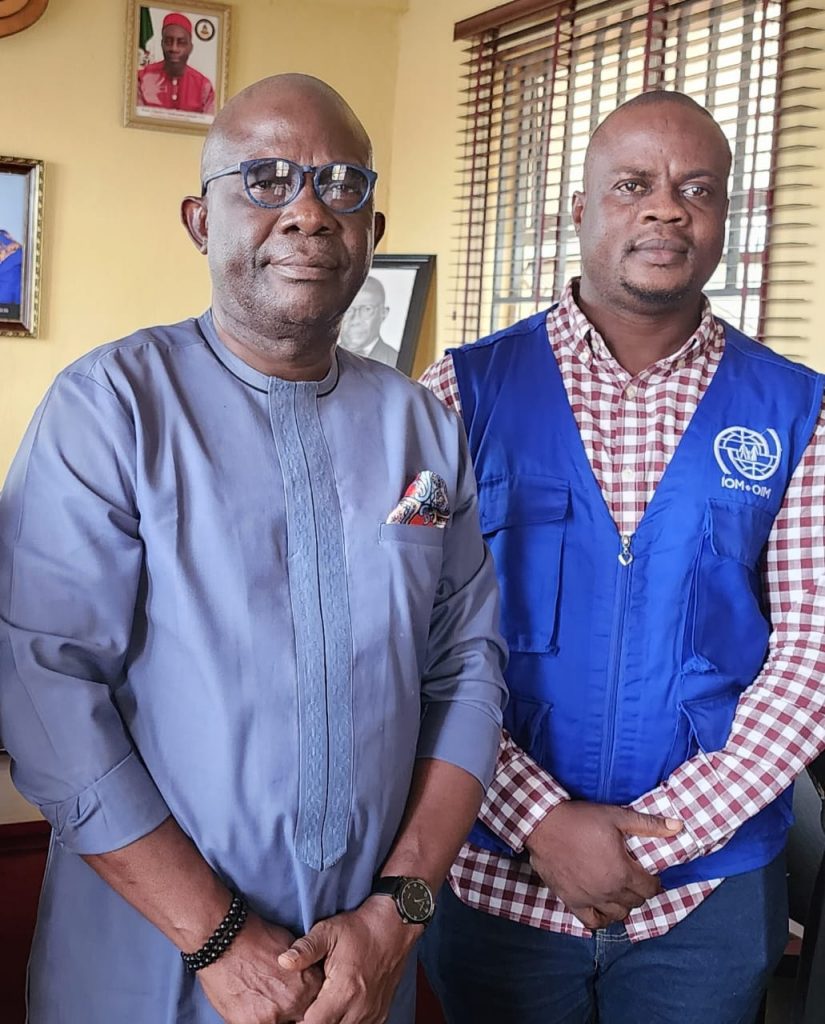
The Commissioner stated this when a delegation from International Organisation for Migration (IOM) paid him a courtesy visit in his office, at Jerome Udorji Secretariat Complex, Awka, on August 29, aimed at sensitizing the populace on impending flood disaster.
He also informed that the Information Ministry has gone further to create and disseminate jingles on the flood disaster, suggesting the use of town criers as an effective means of sensitization and awareness creation in dissemination and management of the forecast flood disaster.
He further explained that the state government has already put in place a committee headed by the Deputy Governor, Dr. Onyekachukwu Ibezim, that are already working to protect lives and properties of the affected areas.
The Commissioner, who noted that flooding is becoming an annual occurrence, appealed for more funding from other international partners to enable the state government engage more media outlets in sensitizing and creating awareness to the populace.
He expressed gratitude to the organization for the intervention made so far, and assured of state government’s readiness to assist in sensitizing and creating awareness through the use of state media outlets.
Earlier, the organization’s Focal Person, Mr. Hezekiah Samuel, informed the Commissioner that the organisation partners with other establishments such as UNICEF, UNDP, RED CROSS, WHO, WASH to sensitize and create awareness on flood disaster and other crisis management.
He stressed the need to use radio, television, billboards, fliers, town criers, Churches, and markets places to reach out to the people, especially those in the flood prone areas.
The Mr Samuel revealed that they have been able to assist victims in some communities with cash assistance, provision of make shift shelters, stakeholder capacity building, provision of sanitation materials in IDPs Camp, distribution of Agricultural Kits, and animal restocking.