


Ghana has announced plans to begin supplying electricity to Nigeria as part of its broader ambition to become an energy hub for the West African region.
Ghana’s Minister for Energy and Green Transition, Dr John Abdulai Jinapor, disclosed the plan on Thursday, saying the country is working to expand its electricity generation and transmission capacity to serve both domestic and regional markets.
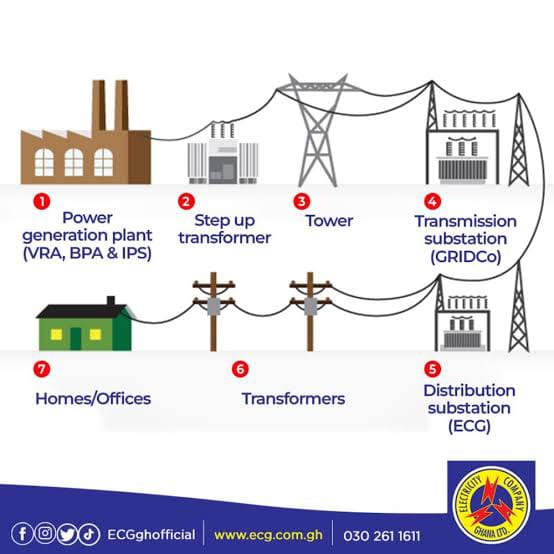
Ghana already exports electricity to neighbouring countries, including Togo, Benin, Côte d’Ivoire and Burkina Faso, through the Ghana Grid Company (GRIDCo), whose transmission network is interconnected with those countries.
Jinapor said Nigeria could become Ghana’s next major electricity export market, although significant investment in transmission infrastructure would be required to support the proposed power trade.
He said Ghana’s objective is to generate enough electricity to meet its own needs while developing the capacity to supply neighbouring countries.
The minister also outlined Ghana’s plans to develop a diversified energy mix combining natural gas, renewable energy and nuclear power.
According to him, the strategy is aimed at ensuring a stable and reliable electricity supply capable of supporting Ghana’s economic ambitions, including President John Dramani Mahama’s 24-Hour Economy initiative.
The initiative is designed to encourage businesses and industries to operate for extended hours, increasing production and economic activity.
Jinapor said nuclear energy, alongside gas and renewable sources, would play an important role in providing the consistent power supply required to sustain industrial operations. Nigeria explores alternative energy sources
Meanwhile, Nigeria is also exploring alternative energy sources to address its growing electricity needs. One of the options being considered is the conversion of cassava wastewater into biogas, which could provide renewable energy while helping to address environmental problems associated with cassava processing.
Prof. Taiwo Hammed, an Associate Professor in the Department of Environmental Health and Technical Director of the Renewable Resources Centre at the University of Ibadan, was speaking at U.S.-Nigeria Transdisciplinary Workshop themed, “From Cassava Effluent to Energy,” held at the University of Ibadan.
He noted that Cassava effluent is often discharged around processing centres without adequate treatment, potentially contaminating nearby streams and other water bodies.
He, however, noted that the biodegradable materials contained in the wastewater can be harnessed for energy production when properly managed.
He also disclosed that cassava wastewater could serve as feedstock for biogas production.
Prof. Hammed further explained that the effectiveness of biogas production from cassava wastewater would depend on factors including the type and quantity of feedstock, retention time, temperature and the nutrient balance required by microorganisms to break down organic matter.
The development of alternative energy sources, alongside improved electricity generation and transmission infrastructure, is expected to remain critical as Nigeria and other West African countries seek more reliable and sustainable power supplies.

