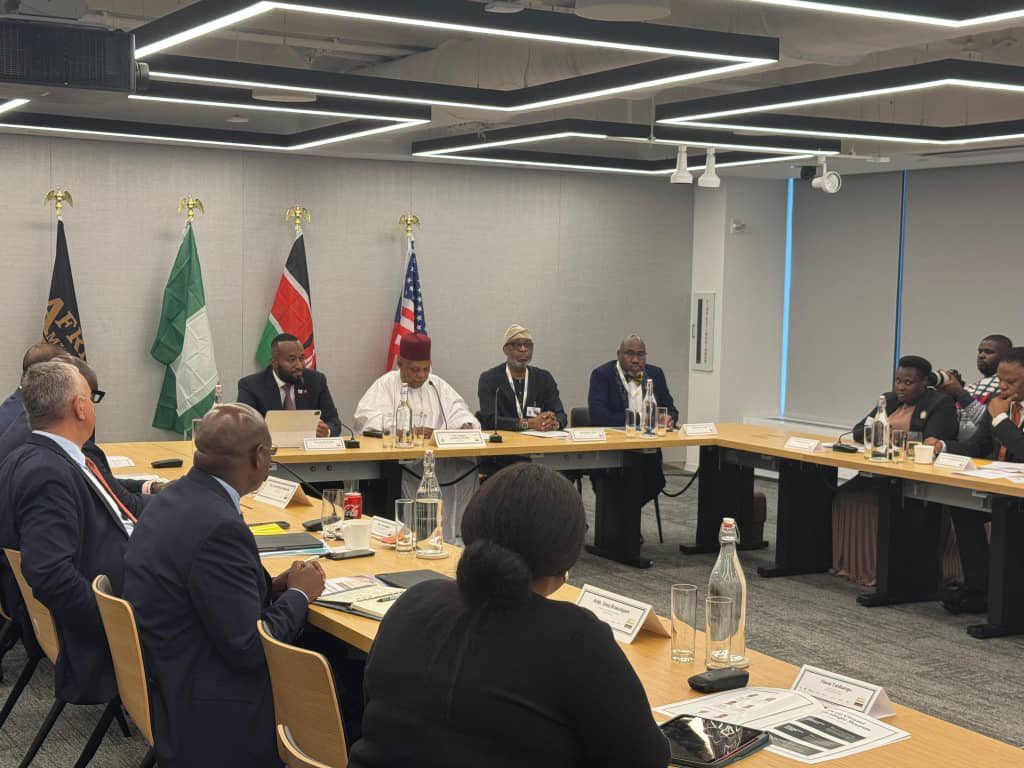

The United States Mission in Nigeria has reaffirmed its commitment to the global fight against corruption, declaring that high-profile Nigerian officials found guilty of corrupt practices will be barred from entering the US.
In a statement posted on its official X (formerly Twitter) handle yesterday, the Mission emphasized that its anti-corruption stance has no boundaries and will extend to individuals at the highest levels of power.
“Fighting corruption knows no borders or limits on accountability. Even when high-profile individuals engage in corruption, they can be barred from receiving U.S. visas,” the Mission stated.
The announcement has sparked reactions across Nigeria’s political and business circles, where corruption remains a persistent challenge despite ongoing reforms.
Meanwhile, in the United Kingdom, Reform UK has unveiled a bold immigration policy that could dramatically reshape the country’s settlement system. The party, led by Nigel Farage, pledged to abolish Indefinite Leave to Remain (ILR) — the right of migrants to permanently settle in the UK after five years.
Instead, Reform UK proposes a system where migrants must reapply for visas every five years, under stricter requirements such as higher salary thresholds and tougher English language standards. The party also promised to restrict welfare access strictly to British citizens, a move it claims would save the government £234 billion over several decades.
Farage, launching the policy, argued that Britain must “stop being the world’s food bank.” He said the plan was necessary to address what he called the “Boris wave” — more than 3.8 million people who entered the UK under looser post-Brexit immigration rules introduced by former Prime Minister Boris Johnson.
“Hundreds of thousands of these migrants will soon qualify for permanent residence. We cannot afford it,” Farage insisted.
However, UK Chancellor Rachel Reeves dismissed Reform UK’s figures as unrealistic, stating that the government was already reviewing ways to limit migrants’ access to welfare benefits.
Official data from the Department for Work and Pensions (DWP) showed that as of July, more than 213,000 people with ILR were claiming Universal Credit, highlighting the financial impact of migrant welfare on the UK system.
The twin announcements from Washington and London underscore the growing global focus on tackling corruption and tightening immigration systems, with implications for Nigeria and its citizens both at home and abroad.