
Anambra Women With Disabilities Advocate Inclusive Reproductive Healthcare System
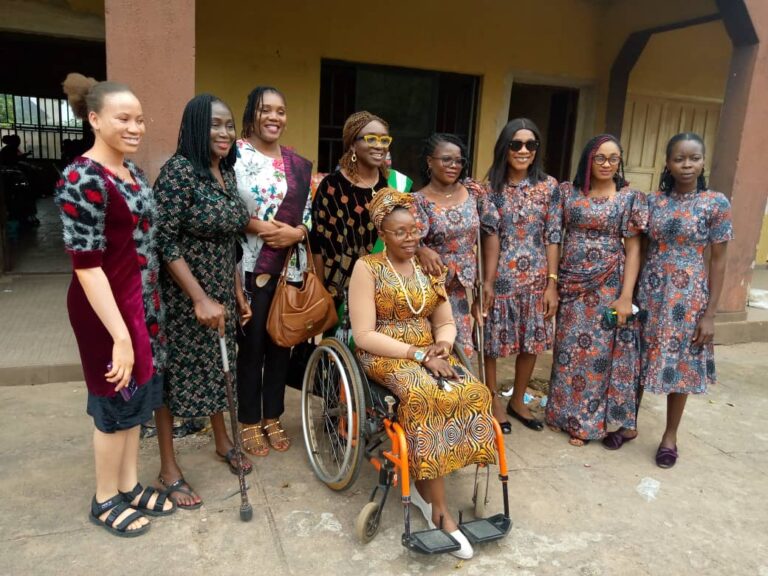
The Association of Anambra State Women with Disabilities (AASWOWD), an umbrella body for clusters of women with disabilities, on Friday advocated for improved healthcare service delivery to people living with disabilities (PWDs).
The State Chairperson of AASWOWD, Comrade Ncheta Nwanokwara, made this statement at their annual August meeting held at Amawbia, Awka South Local Government Area.
She lamented that over the years, they have faced barriers and discrimination when trying to access medical care.
Nwanokwara recalled that the theme for the programme, “Ensuring an Accessible and Inclusive Reproductive Healthcare System for Women with Disabilities,” was inspired by the fact that reproductive healthcare is a fundamental human right, yet women with disabilities are often denied this opportunity.
According to her, they face systematic barriers, discriminatory attitudes, and a lack of accessibility, especially concerning ramps, adjustable beds in some health facilities, sign language interpreters, and readable information materials.
This exclusion prevents many women from receiving the quality healthcare and services they deserve.
She said, “We have continued to face these barriers and discrimination, but we have also made important strides in raising awareness and advocating for a more inclusive reproductive and healthcare system. As we continue to amplify the voices of women with disabilities, we aim to ensure that their needs, perspectives, and rights are central to the design and delivery of reproductive healthcare services in Anambra State.”
“We are calling on all relevant stakeholders in the health sector in Anambra State to increase investment, improve infrastructure, and enhance training for healthcare providers. More importantly, there is a need to build a future where every woman, regardless of her disability, can access the quality, dignified, and empowering reproductive healthcare she deserves. A future where disabilities are never a barrier to health, happiness, and the realization of one’s full potential.”
Another guest speaker, Dr. Ogochukwu Ofiaeli, President of the Medical Women’s Association of Nigeria (MWAN), urged public institutions to implement the Anambra State Disability Rights Law (2018) by ensuring their infrastructure is accessible to all.
Ofiaeli also advised PWDs to seek knowledge to improve their health status and economic sustainability. She emphasized the need for improved data documentation of members accessing medical institutions to better support advocacy campaigns among stakeholders.
In a lecture, Ms. Blessing Nnaeme from Achieving Health Nigeria Initiative (AHNI) described an accessible and inclusive healthcare system as one that removes barriers and provides high-quality, respectful, and equitable care to all individuals, leaving everyone in a better and healthier state without categorization or discrimination.
Nnaeme noted that this includes ensuring medical facilities are physically accessible, with features like ramps, elevators, and wide doorways, and offering accessible communication methods such as sign language interpreters, Braille materials, or communication devices if needed.
“Engage with disability advocacy groups or a healthcare navigator who can help you access appropriate services and ensure your needs are met. Work with your healthcare provider to create a personalized health plan that considers your disability and any specific accommodations or modifications you might need,” she added.
Earlier, Comrade Ugochukwu Okeke, State Chairman of the Joint National Association of Persons with Disabilities (JONAPWD), represented by his Vice Chairman, Comrade Ifeanyichukwu Ugwegbe, urged AASWOWD to explore opportunities such as waste recycling and state and federal government programs for economic empowerment, skills acquisition and development