

By Nigerian Tribune
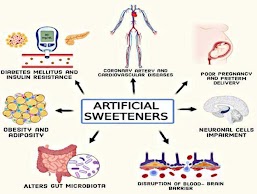
A new study has warned that consuming higher amounts of artificial sweeteners and other sugar substitutes may be linked to an increased risk of heart attack and stroke.
Researchers at the Cleveland Clinic found that elevated levels of the sugar alcohol xylitol were associated with a higher risk of cardiovascular events such as heart attack and stroke.
Sugar substitutes, also known as artificial sweeteners, are widely used in diets and “low-calorie” products to allow people to enjoy sweet flavours without the usual calories. Many of them are significantly sweeter than table sugar; for instance, saccharin is typically hundreds of times sweeter than sugar.
Aspartame, sucralose, saccharin, and sugar alcohols such as erythritol and xylitol are commonly used in sugar-free candies, chewing gums, baked goods, and oral care products like toothpaste.
Several regulatory agencies consider many of these sugar substitutes safe when consumed within recommended daily intake limits. However, although these products are labelled “Generally Recognised as Safe”, the way people actually consume them raises concerns that may not have been fully addressed in earlier research.
The research team, led by Stanley Hazen, MD, PhD, analysed data from more than 3,000 patients in the United States and Europe and found that high circulating levels of xylitol were associated with an increased three-year risk of cardiovascular events.
Findings published in the European Heart Journal also showed that patients with the highest plasma levels of xylitol were significantly more likely to experience a cardiovascular event.
To validate the results, the researchers conducted preclinical tests and discovered that xylitol increased platelet clotting activity, thereby heightening the risk of thrombosis (blood clot-forming effect).
They also monitored platelet activity in individuals who consumed a xylitol-sweetened drink compared with those who consumed a glucose-sweetened drink. Every measure of clotting ability rose significantly immediately after xylitol consumption but not after glucose intake.
Senior and corresponding author Stanley Hazen, MD, PhD, of the Cleveland Clinic’s Lerner Research Institute, emphasised the need for long-term clinical studies to better understand how these sweeteners affect blood and heart function across different populations.
In light of the findings, he advised caution, particularly for individuals with conditions linked to thrombosis or other cardiovascular diseases.
“I believe that choosing sugar-sweetened treats occasionally and in small amounts may be preferable to regularly consuming foods and drinks sweetened with sugar alcohols, especially for people at elevated risk of thrombosis, such as those with heart disease, diabetes, or metabolic syndrome,” Dr Hazen said.
