


Polio, Measles: UNICEF Warns Unvaccinated Children Can Spread Virus In Schools, Communities
Calls On Media To Intensify Vaccination Campaign
The United Nations Children’s Fund, UNICEF has tasked the media to intensify Campaign to create adequate awareness about the critical need for polio vaccination across Nigeria’s Southwest and Edo States.
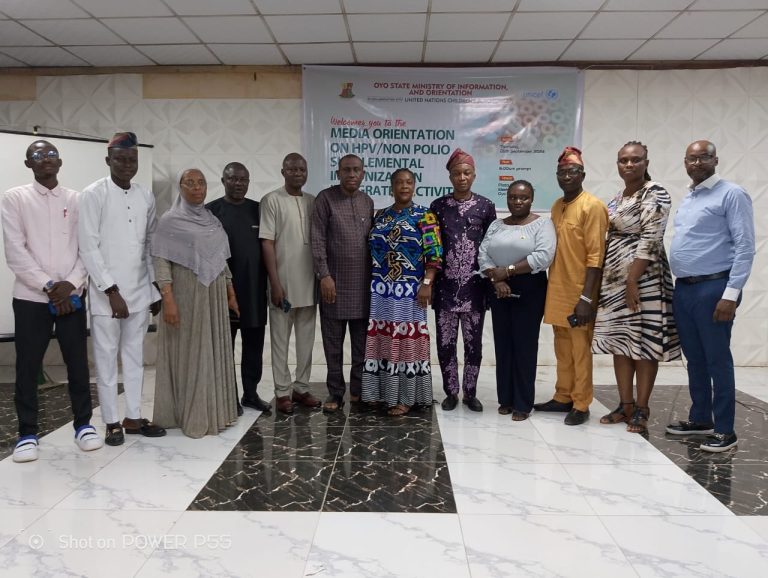
The call was made at a one-day Zonal Media Orientation on Non-Polio Supplemental Immunization Integrated Activities (NPSIA), which took place in Oyo town on Thursday, September 26, 2024.
Media practitioners were urged to amplify messages of immunization to safeguard children from the debilitating effects of polio and other preventable diseases.
Polio and measles virus, a crippling disease that spreads rapidly through communities, can be prevented by a simple, life-saving vaccine. Yet in some parts of Nigeria, misinformation and disinformation have led to vaccination hesitancy, leaving children vulnerable to not only polio but a range of other diseases. The consequences of inaction are far-reaching.
Presentation a paper tilted, “A Child Who Is Not Vaccinated Today Poses Significant Threat To Others.” the UNICEF’s Social and Behavioral Change Specialist, Mrs Aderonke Akinola Akinwole, warned that unvaccinated children can become carriers of the virus, potentially spreading it in schools, playgrounds, and communities.
She maintained that this could result in severe illnesses and irreversible damage,
“Unvaccinated children can become carriers of the virus, potentially spreading it in schools, playgrounds, and communities, resulting in severe illnesses and irreversible damage.”
She reminded the audience that ensuring children are vaccinated is not only an act of personal responsibility, but one of collective protection. “It’s about safeguarding the entire community,” she said.
Also speaking, the Health Promotion Officer for Oyo State, Mr. Olarinde Olaoye Samuel, warned that “if a child comes down with polio, it can affect over 200 children in the community.” With no cure for the disease, the only defense is prevention through vaccination.
He further cautioned that negligence can lead to the spread of deadly pathogens, leaving a trail of disability and devastation in its wake.
He pointed out that in a country where many have lost their sight, mobility, and lives due to diseases like polio, tetanus, and measles, the stakes are high.
Mr. Olarinde also pointed out that unclean environments, direct contact with infected individuals, and giving birth in unsanitary conditions are among the leading causes of such infections.
He, however, emphasized that those deadly pathogens can be effectively prevented through widespread immunization.
He encouraged the media to take a proactive role in that fight. “The media has the power to shape narratives and influence behaviors. “You must advocate for the full completion of routine immunization schedules for children from birth to 59 months old. Share vaccination schedules, promote awareness campaigns, and use your platforms to dispel the myths that continue to undermine public health efforts.”
Virus vaccination, along with other essential vaccines such as those for tetanus, diphtheria, measles, and yellow fever, can prevent a host of life-threatening diseases.
Mrs. Akinwole noted that vaccination is not just about protecting children from polio; it is about ensuring a healthy future for all. For example, the human poliovirus vaccine also plays a crucial role in protecting women and girls from diseases that can lead to conditions like cervical cancer.
The orientation, held in Oyo town in Oyo state, drew over fifty participants from across the Southwest States of Osun, Ondo, Ekiti, Ogun, Edo, and the host state, Oyo.
“One of the critical takeaways from the event was the urgent need for ongoing media engagement. Mrs. Akinwole emphasized that maintaining a healthy community requires collective action. “It’s not a one-man job,” she said, urging the media to continuously share accurate, evidence-based information about the importance of vaccination.
She encouraged journalists to feature success stories from families who have benefited from immunization and to correct the myths and rumors that continue to circulate.
“The event closed with a call to action for media practitioners to uphold their role as watchdogs of public health, ensuring that accurate information about vaccination reaches every corner of society. In a world where disinformation spreads rapidly, the media’s responsibility to promote life-saving vaccines has never been more critical.
As the region faces a resurgence of vaccine-preventable diseases, South west stakeholders and UNICEF’s partnership with the media signals a powerful push toward safeguarding the health of children, women and all communities. Prevention, after all, is not just better than cure—it’s the only defense we have.

