

PSC Will No Longer Tolerate Extortions, Abuses In Southeast–Argungu warned
By Sylva Emeka-Okereke
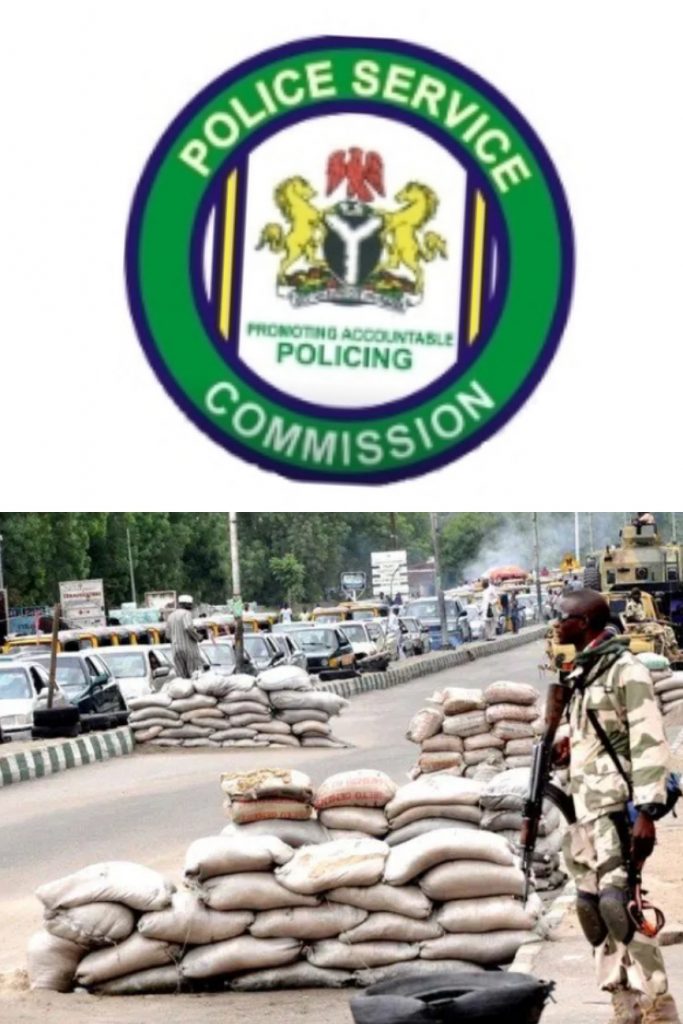
The Chairman of the Police Service Commission, PSC, retired Deputy Inspector-General of Police, Hashima Argungu, has read the Riot Act to security officers mounting roadblocks in the Southeast, warning that the Commission will no longer tolerate such high-level abuses in the region.
The Deputy IGP who acknowledging widespread police misconduct, human rights violations and extortion in the region, urged them to discontinue such inhuman acts or face disciplinary actions.
Argungu, expressed displeasure over the unruly act during the stakeholders’ peace meeting in Enugu, and warned that PSC will no longer tolerate extortions and abuses in the region.
“The PSC will no longer tolerate such abuses”, he warned while pledging disciplinary action against erring officers.
He however called on civil society organizations and the Nigeria Bar Association, NBA, to collaborate in addressing these issues while restoring public trust in law enforcement.
Recently, the International Society for Civil Liberties and Rule of Law (Intersociety) alleged that the Police and military personnel extorted ₦21.8bn at roadblocks in Southeast within two months.
This, therefore, led to the call by some stakeholders to downsize roadblocks in the region.
According to a statement by the Chairman of Intersociety, Comrade Emeka Umeagbalasi, the Police allegedly pocketed ₦15 billion, while the military netted ₦6.8 billion between December 2024 and January 2025.
Umeagbalasi described the Uga Junction and Atani Road Naval checkpoints in Onitsha, Anambra state, as the “most lucrative,” allegedly yielding over ₦600 million from extortion at gunpoint.
Umeagbalasi stated thus, “The deployed personnel of the Nigerian Armed Forces and the Nigeria Police Force in the Southeast seized no less than ₦21.8 billion from civilians during the Christmas and New Year periods, under gunpoint extortion and related practices.”
The findings revealed that at least 300 direct military roadblocks and 500 patrol teams in the region with 98 percent involved in extortion.
Each military roadblock reportedly collected an average of ₦100,000 daily, translating to ₦80 million daily or ₦2.4 billion monthly.
Police personnel manning about 2,500 roadblocks in the region allegedly raked in an average of ₦10.5 billion over two months, alongside ₦3.5 billion from barracks extortions and an additional ₦1 billion from other forms of corruption.
According to his “state-by-state” breakdown of Police extortion, Imo state yielded ₦2.94 billion while Anambra raked ₦2.52 billion and Abia state: ₦2.1 billion. Enugu state: ₦1.68 billion and Ebonyi state: ₦1.26 billion
Umeagbalasi highlighted that the acts contravened Section 108 of the Armed Forces Act, which prescribes a 14-year jail term for military personnel involved in extortion, and Section 99 of the Criminal Code Act, which criminalizes police roadblock extortion with penalties of up to seven years imprisonment.
He urged the Federal Government to take urgent step to curb such corrupt practices, enforce existing laws, and hold perpetrators accountable.
He further called on civil society organizations and the Nigeria Bar Association, NBA, to collaborate in addressing these issues while restoring public trust in law enforcement.
