
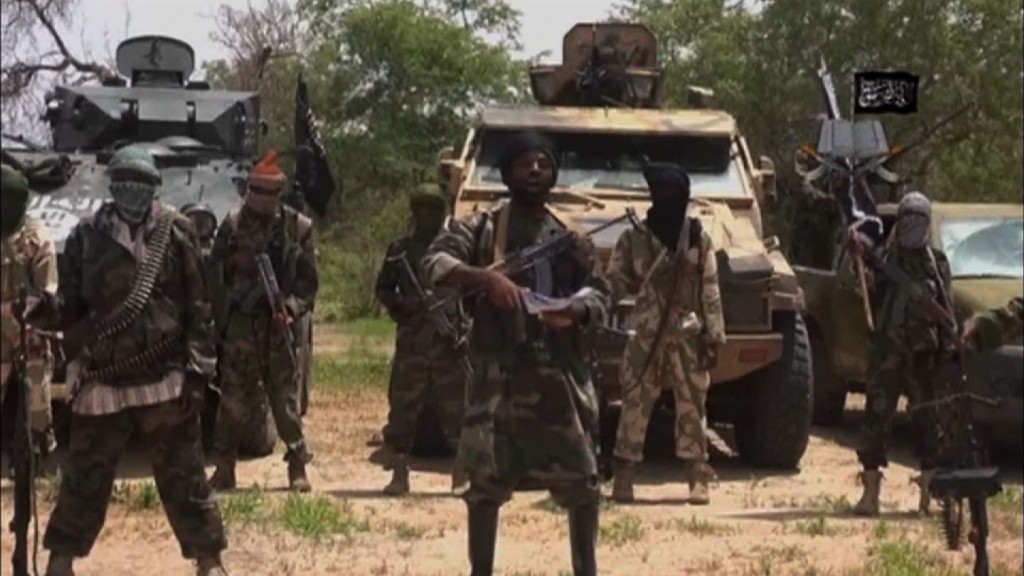
The United States government has designated a Nigerian national and three Nigeria-based companies as alleged financiers of the Islamic State of Iraq and Syria (ISIS), as part of a wider crackdown on individuals and businesses accused of facilitating the group’s financial operations across several regions.
The action, announced by the US Department of State on Monday, targets three individuals and six entities operating in Europe, the Middle East, and West Africa.
American authorities allege that the sanctioned persons and organisations played roles in moving funds that supported ISIS activities and affiliates.
According to a statement issued by US Department of State spokesperson Thomas Pigott, the designations are aimed at disrupting transnational financial networks that enable the extremist group to operate across borders.
“Today’s designations target three individuals and six entities operating across Europe, the Middle East, and West Africa who have enabled ISIS to move money across borders,” Pigott said.
Among those named is Nigerian national Mukhtar Adamu Muhammad, also known as Mukhtar Adamu. The US government alleges that he used a network of money-exchange businesses in Nigeria to facilitate financial transactions linked to ISIS-West Africa.
Three Nigerian companies were also added to the sanctions list. They are: Generation Currency Bureau De Change Limited, based in Lagos; Nine to Nine Exchange Bureau De Change Limited, also located in Lagos; and Manhattan Bureau De Change Limited, based in Kano.
The sanctions were imposed under Executive Order 13224, a key US counter-terrorism measure that authorises the designation of individuals and entities accused of providing support to terrorist organisations. The move effectively freezes any assets the designated persons may have under US jurisdiction and generally prohibits US persons from engaging in transactions with them.
Also included in the latest round of sanctions are individuals and companies based in France, Syria and Türkiye, whom US authorities accuse of participating in a broader financial network that supported ISIS operations.
The latest action underscores ongoing international efforts to disrupt funding channels used by extremist groups.
Terrorist organisations often rely on complex financial networks involving money-transfer businesses, informal exchange systems and cross-border transactions to move funds and sustain their activities.
The United States also reaffirmed its security cooperation with Nigeria in the fight against terrorism. Pigott referenced a joint operation conducted on May 16, 2026, which reportedly led to the killing of Abu-Bilal al-Minuki, described by US authorities as the second-in-command of ISIS.
He said Washington would continue to deploy diplomatic, financial and legal measures against ISIS and its supporters around the world.
“We will continue to use every diplomatic and legal tool available to hold ISIS and its supporters accountable, wherever they operate and however they move money,” he stated.
ISIS, which emerged from al-Qaeda in Iraq before evolving into a separate terrorist organisation, has been designated by the United States as a Specially Designated Global Terrorist organisation since 2004. The group and its affiliates have been linked to attacks and insurgent activities in several countries, including parts of West Africa.
The latest sanctions are part of ongoing international efforts to weaken the financial infrastructure that sustains terrorist organisations and their regional affiliates.
