

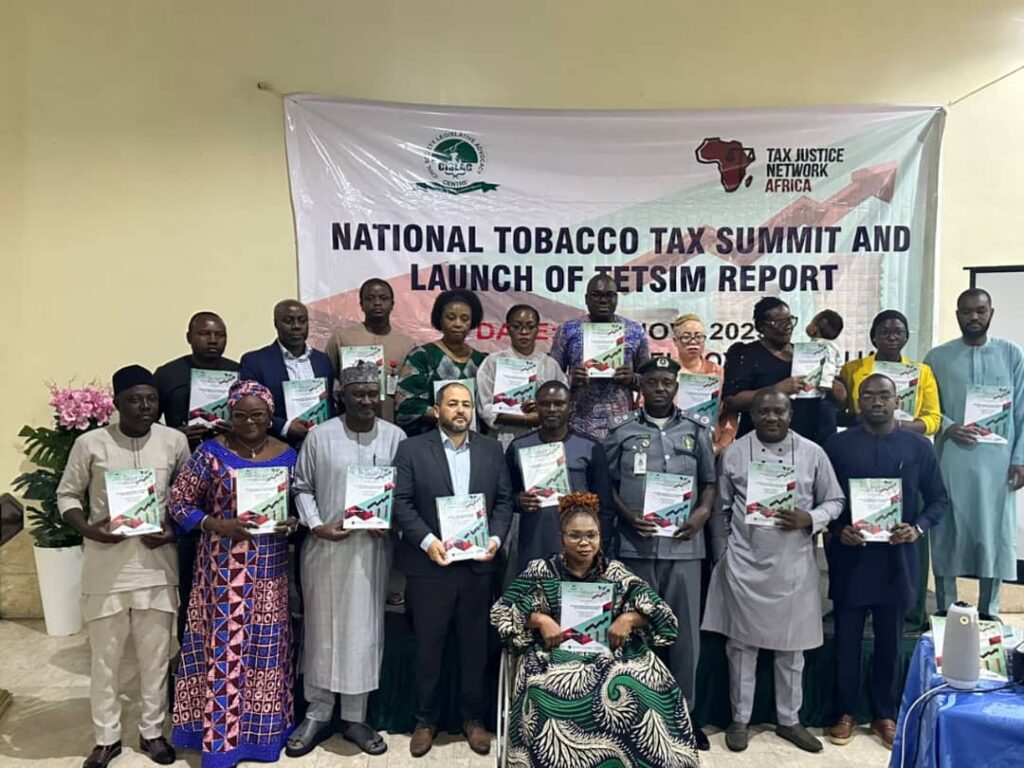
_Statistics show tobacco accounts for more than seven million deaths annually, also causes long-term illnesses_
The Civil Society Legislative Advocacy Centre, CISLAC, has stressed the urgent need for Nigeria to strengthen its tobacco excise tax system to reduce tobacco consumption and protect public health.
The Executive Director of CISLAC, Mr. Auwal Rafsanjani, while speaking at the Annual Tobacco Tax Summit and Launch of the Tobacco Excise Tax Simulation Report for Nigeria, explained that taxes on harmful products like tobacco was not merely for revenue generation, but to discourage consumption and safeguard the health of citizens. .
“Consumption taxes on tobacco and alcohol are meant to discourage use and protect public health. Economists refer to them as sin taxes because they target harmful products,” he said.
Rafsanjani, who cited statistics from the World Health Organization (WHO), noted that tobacco use remains one of the world’s biggest public health threats, accounting for more than seven million deaths annually and causing long-term illnesses.
He stressed that reducing the affordability of tobacco products was key to curbing their consumption, particularly among the poor and young people.
According to him, higher tobacco prices had been proven to discourage new smokers and reduce smoking prevalence among youth.
CISLAC Executive Director also acknowledged Nigeria’s progress since 2018 with the adoption of a mixed excise tax system for cigarettes, and further pointed out that the country still falls short of the ECOWAS and WHO-recommended levels of tobacco taxation.
To support evidence-based advocacy, CISLAC, in partnership with the University of Cape Town’s Research Unit on the Economics of Excisable Products and Tax Justice Network Africa, recently validated a Tobacco Excise Tax Simulation Report for Nigeria, which was officially launched at the summit.
