

TCN News
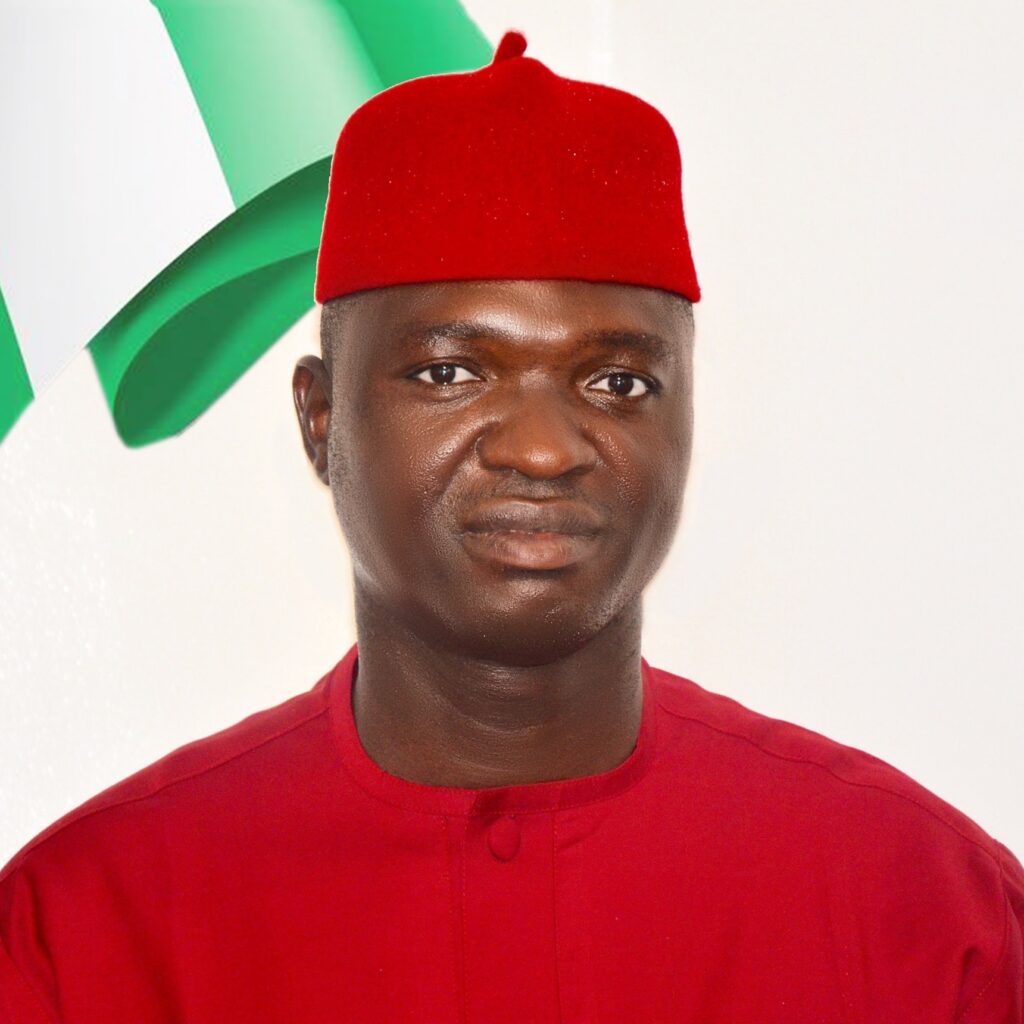
UMUDIKE, Abia State — Nigeria must move beyond celebrating the richness of its indigenous languages and begin treating them as practical instruments of education, cultural preservation and community development, President General of the Igbo Vanguard Group, Engr. James Nnadozie Uchegbuo, has said.
Uchegbuo made the call while speaking with our correspondent in Umudike on Wednesday, September 2, 2026, in connection with Indigenous Literacy Day, an Australian observance dedicated to promoting literacy among Indigenous communities and preserving First Nations languages and stories.
Although the observance is not an officially recognised national day in Nigeria, its focus on indigenous languages, access to reading materials and culturally relevant education has wider implications for a multilingual country such as Nigeria.
The global conversation is particularly relevant as UNESCO continues the International Decade of Indigenous Languages, 2022–2032, aimed at preserving, revitalising and promoting indigenous languages. UNESCO says language is closely linked to identity, learning, participation in society and the transmission of knowledge between generations.
Uchegbuo, who is also Vice President of Ikwuano Development Union Federated and President General of Ahuwa-Oboro Autonomous Community in Ikwuano Local Government Area of Abia State, said Nigeria should use the occasion to reflect on the declining use of indigenous languages among younger generations.
He said the country had an opportunity to transform indigenous languages from subjects of cultural nostalgia into living languages of learning, documentation, research and community development.
“An indigenous language is more than a means of communication. It carries the history, values, worldview, knowledge and identity of a people. When a language disappears from everyday use, an important part of the community’s collective memory is also placed at risk,” he said.
He urged the Federal Government, state governments, education authorities, traditional institutions, universities, publishers and community organisations to establish a coordinated programme for the production of books and other learning materials in Nigerian indigenous languages.
According to him, such a programme should begin with children, particularly at the foundational stages of education, where pupils can be introduced to reading and writing through languages they understand while simultaneously acquiring English and other widely used languages.
His position is consistent with UNESCO’s broader multilingual education guidance, which recognises the importance of allowing learners to receive education in languages they understand. UNESCO currently estimates that more than a quarter of a billion learners worldwide lack access to education in a language they understand best.
Uchegbuo recommended that Nigerian education authorities develop indigenous language reading schemes, produce age appropriate storybooks, dictionaries and digital learning resources, and encourage schools to work with elders, writers, cultural custodians and community historians.
He also called for greater documentation of oral traditions, folktales, proverbs, traditional ecological knowledge and community histories before they are lost.
“Government should not leave this responsibility entirely to cultural associations. Indigenous language preservation should become part of public policy, especially in basic education and community development,” he said.
The community leader further advocated the use of technology to make indigenous languages more attractive and accessible to young Nigerians.
He suggested the development of mobile applications, digital libraries, audio archives, online dictionaries and educational platforms capable of supporting Nigerian languages, arguing that young people would be more likely to engage with indigenous languages when those languages are represented in the digital spaces they already use.
He urged universities and research institutions to increase scholarship on Nigerian languages and make the findings accessible to schools and communities rather than keeping them largely within academic circles.
Uchegbuo also called on traditional rulers and community development unions to establish local literacy initiatives, including storytelling sessions, reading clubs and intergenerational language programmes.
He said community leaders could work with teachers and parents to ensure that children learn the language of their communities at home while acquiring the competencies required to participate effectively in the wider national and global environment.
For Nigeria, he said, the issue should not be framed as a choice between indigenous languages and English.
“Speaking and learning one’s indigenous language should not prevent a child from learning English or any other international language. The objective should be multilingual competence. We can preserve our identity while equipping our children to compete globally,” he said.
The Australian Indigenous Literacy Day, held annually on the first Wednesday of September, provides a model of how literacy, language and cultural identity can be brought together in a national public conversation. The Indigenous Literacy Foundation says the observance grew from efforts to improve literacy in remote Australian communities and has developed into a national event involving schools, libraries, publishers and other organisations.
Uchegbuo therefore appealed to the National Assembly, Federal Ministry of Education, state education ministries, Universal Basic Education authorities, cultural agencies and relevant development partners to examine the possibility of establishing a structured Nigerian Indigenous Languages and Literacy Initiative.
He said such an initiative could provide locally produced reading materials, support teacher training, document endangered languages and encourage children to read stories reflecting their communities and cultural experiences.
He further recommended that Nigeria’s indigenous language policy should be accompanied by measurable funding, curriculum development, teacher deployment and regular assessment to ensure that declarations translate into classroom practice.
“Preserving a language requires more than speaking about it once a year. It requires books, teachers, writers, researchers, technology, funding and, above all, deliberate transmission from one generation to another,” Uchegbuo said.
As Indigenous Literacy Day is observed in Australia, the message emerging from Umudike is therefore less about importing another international observance into Nigeria and more about confronting a domestic question: whether Nigeria can preserve its extraordinary linguistic heritage while making its indigenous languages relevant to the education and digital lives of future generations.
UNESCO’s current work on indigenous languages underscores the international dimension of that challenge, with Nigeria among countries working towards a national action plan under the International Decade of Indigenous Languages.