
On The Foreign Scene
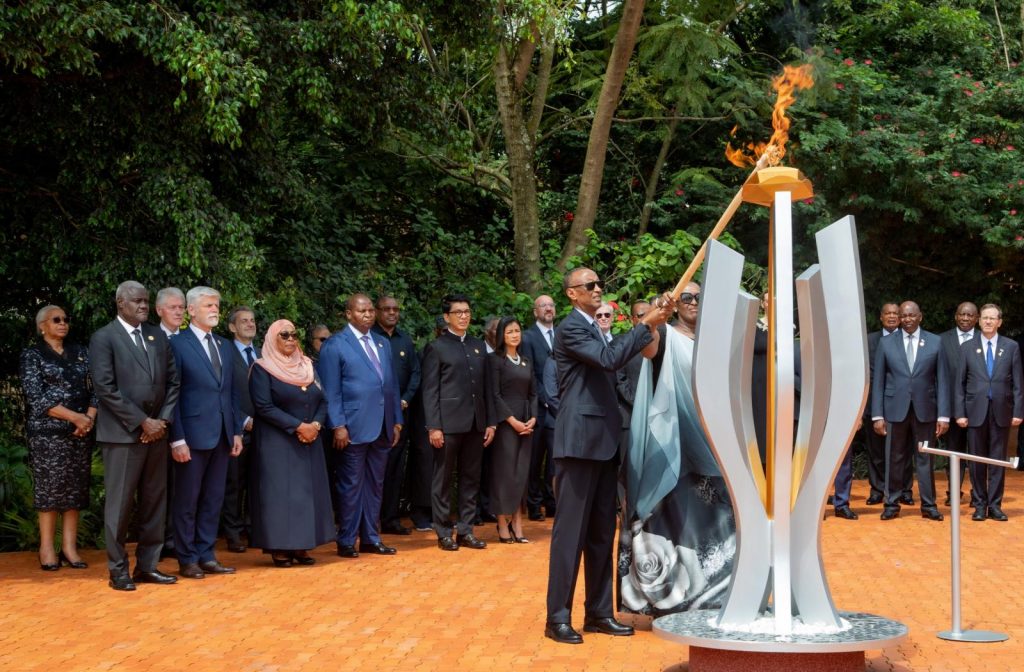
As Rwanda commemorates the 30th anniversary of the genocide, President Paul Kagame has emphasized the importance of challenging and revising the history of the genocide to prevent its recurrence. He highlighted the resilience of Rwandans in facing the challenges of rebuilding their nation after the devastating loss, stressing the significance of unity as the foundation for progress.
Kagame reflected on Rwanda’s journey, acknowledging the profound impact of the genocide on the country while also celebrating the remarkable progress made through collective efforts to rebuild.
A night vigil is scheduled for later on Sunday as part of a week-long series of remembrance activities. Naphtal Ahishakiye, head of Ibuka, a group of genocide survivors, emphasized the importance of keeping the memory of the genocide alive to prevent future atrocities and promote reconciliation.
He emphasized the need for continued education and remembrance to understand the causes and consequences of genocide.
President Kagame, who has played a central role in Rwanda’s post-genocide recovery, faces criticism from rights activists for creating a climate of fear that stifles dissent. Critics accuse the government of silencing opposition voices and suppressing free expression.
Despite challenges, Rwanda has also faced tensions with neighboring countries, including Congo, Burundi, and Uganda. Accusations of supporting armed groups and backing rebel movements have strained relations, underscoring the complexities of regional dynamics.